
Камъни, езотерика, информация и лични истории за бижута
The Difference Between Auralite-23, Super 7 and Cacoxenite


The Difference Between Auralite-23, Super 7 and Cacoxenite
In the world of natural stones, few names inspire as much admiration — and as much confusion — as Auralite-23, Super 7 and cacoxenite.
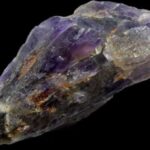
At first glance, they look similar. Violet and smoky shades, golden threads, reddish specks and mysterious inclusions create the impression of tiny worlds enclosed within the stone.
Behind the visual similarity, however, lie different concepts.
Auralite-23 and Super 7 are trade names for quartz materials with inclusions. Cacoxenite is a distinct mineral that may occur as an inclusion in other minerals.
Understanding this distinction helps us choose not according to the loudest promise, but according to the stone’s true character, beauty and symbolism.
Auralite-23: the ancient story of Canadian amethyst
Auralite-23 is a trade name associated with amethyst material from the Thunder Bay area of Ontario, Canada. The original deposit is also presented as the Auralite 23 Mine or the “Cave of Wonders”.
The geological formations associated with the material are considered exceptionally ancient — approximately 1.2 to 1.5 billion years old.
The base of Auralite-23 is quartz, most often with amethyst, clear and smoky areas. A variety of mineral and metallic inclusions have been described in different specimens, including hematite, magnetite, pyrite, goethite, rutile, titanite, chalcopyrite, epidote, gold, silver and others.
Does every Auralite contain exactly 23 minerals?
Not necessarily.
The number 23 refers to the collection of minerals and elements associated with different studied specimens of this material. It does not mean that all 23 components are present in, or can be proven in, every individual bead.
It is more accurate to say that Auralite-23 may contain a variety of mineral inclusions rather than that every piece represents the same exact formula.
What does Auralite-23 look like?
Specimens can be violet, smoky, reddish or almost transparent. Some display chevron lines, colour zoning and rich iron inclusions, while others appear much finer and lighter.
Appearance alone, however, is not enough to determine origin with certainty. With Auralite-23, supplier information and traceability to the Canadian deposit are especially important.
Symbolism and energy
In crystal therapy, Auralite-23 is associated with:
- spiritual awakening;
- releasing accumulated tension;
- harmonising the chakras;
- inner reassessment;
- moving through periods of profound change.
Its symbolism is that of ancient memory — a stone that reminds us how many layers can come together within a single whole.
learn more about Auralite 23 here
Super 7: the symbol of harmonious synergy
Super 7 is also known as Melody’s Stone or Sacred Seven. The name is traditionally associated with included quartz material from Brazil, most often linked to the Espírito Santo region.
In commercial and esoteric descriptions, Super 7 is presented as a combination of:
- clear quartz;
- amethyst;
- smoky quartz;
- rutile;
- goethite;
- lepidocrocite;
- cacoxenite.
There is an important mineralogical detail here: clear quartz, amethyst and smoky quartz are varieties of the same mineral — quartz. The term “seven minerals” is therefore part of the traditional commercial description rather than a completely precise mineralogical formula.
Are all seven components present in every stone?
Not necessarily.
In faceted stones and small beads, individual inclusions are almost impossible to identify reliably by sight alone. Some of them can only be confirmed through specialised analysis.
Super 7 should be understood as a trade name for a certain type of included quartz, not as a guarantee that every bead contains seven easily identifiable minerals. The official mineralogical database Mindat also defines Super Seven as a synonym for Melody’s Stone and a trade name for quartz with inclusions.
What does Super 7 look like?
Super 7 often combines clear, violet and smoky quartz zones. Needle-like, fibrous, pinpoint or cloud-like inclusions may be visible inside in reddish, brown, black and golden tones.
Some stones are light and ethereal, others dark and almost mystical. There is no fixed rule that Super 7 is always more transparent than Auralite-23.
Symbolism and energy
In crystal therapy, Super 7 is associated with:
- inner wholeness;
- interaction between all chakras;
- combining intuition and grounding;
- directing energy towards a clear goal;
- harmony between thoughts, feelings and actions.
It is sometimes claimed that Super 7 does not require energetic cleansing. This is part of its esoteric tradition, but it is not a provable characteristic. If cleansing is part of your personal ritual, you can safely use it with this stone as well.
Cacoxenite: the distinct mineral behind a confusing legend
Cacoxenite is a mineral in its own right, not a variety of amethyst and not another name for “phantom amethyst”.
It may form yellowish, golden-brown or radially arranged crystal aggregates. In some commercial descriptions, the phrase “amethyst with cacoxenite” is used when similar inclusions are observed in a quartz base.
The problem is that many golden and brownish fan-shaped inclusions in amethyst that are visually identified as cacoxenite later turn out to be goethite or other iron minerals. Cacoxenite therefore cannot be reliably identified by the colour and shape of an inclusion alone.
And what is phantom amethyst?
Phantom amethyst is amethyst in which internal outlines from different stages of crystal growth are visible. They may contain hematite, goethite or other inclusions, but they are not synonymous with cacoxenite.
These “phantoms” may be formed by different colour zoning or by microscopic inclusions trapped between separate growth periods. They do not necessarily indicate the presence of cacoxenite.
Cacoxenite is a mineral. A phantom is a growth structure. One is not a synonym for the other.
Symbolism and energy
In esoteric tradition, cacoxenite is associated with:
- spiritual development;
- expanding perspective;
- discovering meaning during periods of change;
- intuition;
- consciously releasing outdated thought patterns.
When it is genuinely present as an inclusion in amethyst, its symbolism combines with that of calm, inner stillness and spiritual awareness.
Can we tell them apart from a photograph alone?
Sometimes we can make an educated guess, but not a definite conclusion.
Colour, transparency and the form of the inclusions can provide clues, but different iron minerals can look similar, especially when enclosed in a small faceted bead.
A stone does not need merely to have seven colours, seven visible inclusions or golden threads to be identified as Super 7. Likewise, not every reddish amethyst from Canada is necessarily Auralite-23.
The most reliable indicators remain:
- accurate information about origin;
- the supplier’s reputation;
- laboratory analysis, when available;
- an honest description of what can and cannot be confirmed.
How to choose your jewellery?
Do not begin with the question: Which of the three stones is the most powerful?
A more meaningful question is: Which story and symbolism feel closest to me?
Choose Auralite-23 if you are drawn to its ancient Canadian origin, amethyst layers and the symbolism of awakening and profound change.
Choose Super 7 if you are looking for a multi-layered quartz that symbolically combines intuition, grounding, clarity and inner wholeness.
Choose cacoxenite or a stone with confirmed cacoxenite inclusions if you are attracted to its golden structures and the symbolism of spiritual growth and a new perspective.
And when the mineral composition has not been confirmed by laboratory analysis, the more honest and beautiful description is simply:
Natural amethyst with distinctive golden or iron inclusions.

 Chakra Balancing
