



Seven Chakras Pendulum – Natural Stones, Class A
Original price was: 16.45€.12.73€Current price is: 12.73€.
Suitable for dowsing, Reiki practices, chakra work and overall energy balance + gift e-guide The Art of the Pendulum
In stock (can be backordered)
Seven Chakras Pendulum – Natural Stones, Class A
Unlock the potential of your pendulum: With every order, you receive our exclusive guide “The Art of the Pendulum”. Discover the secrets of the Bovis scale, learn how to cleanse stones properly, and turn your intuition into a precise diagnostic tool.
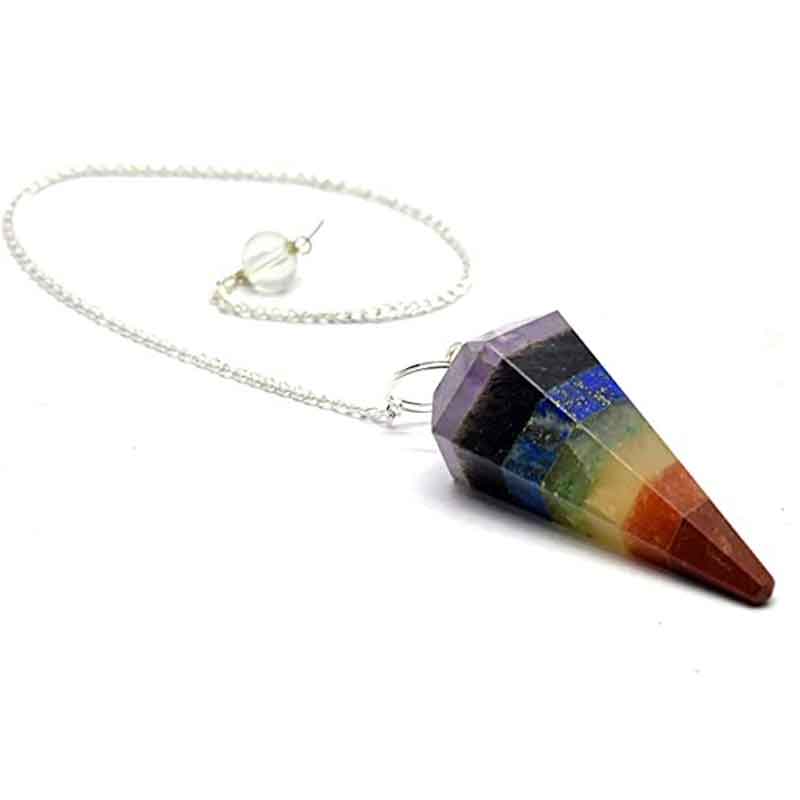
Shape: Hexagonal pyramid
Size: Length 38–40 mm • Thickness: 5 mm at the tip / 15 mm at the top
Weight: approx. 25 g
Material: Natural stone, Class A
Chain color: silver-tone metal
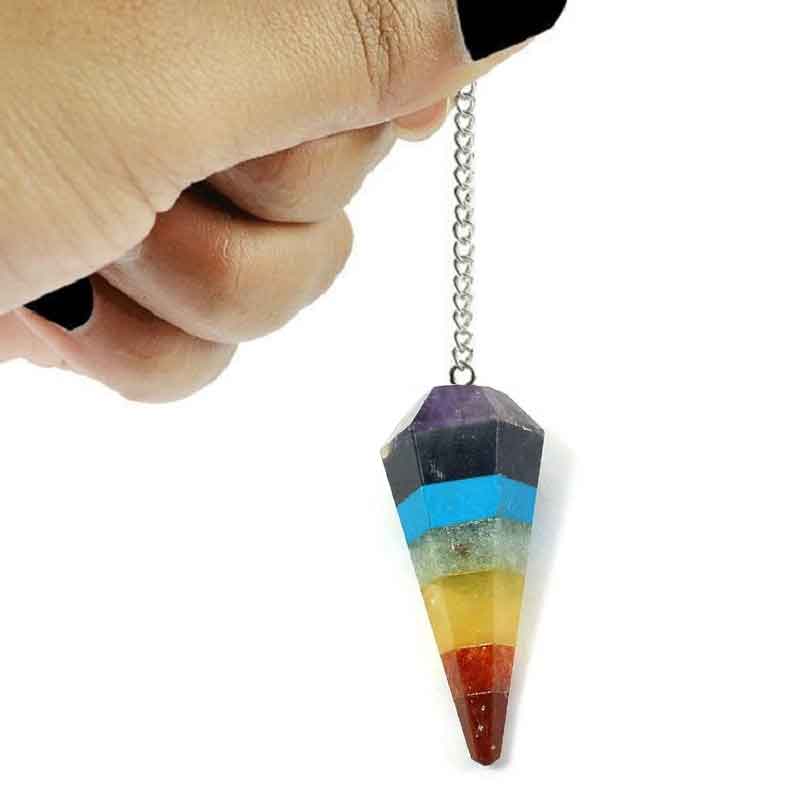
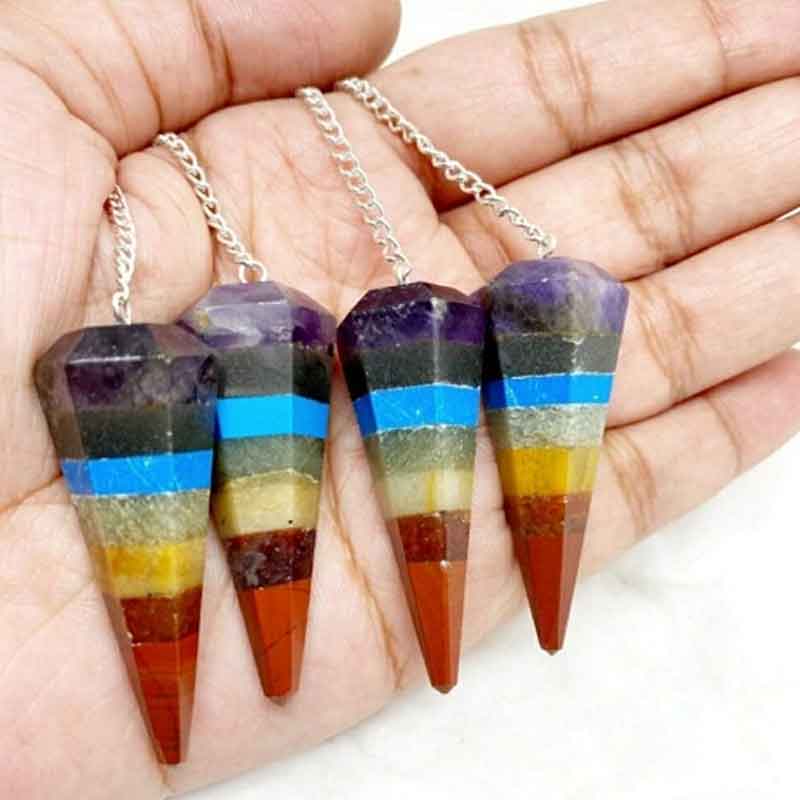
The “Seven Chakras” pendulum is a powerful energy tool made from seven different natural stones, arranged in a symbolic sequence — from the root chakra to the crown chakra. Each level carries the vibrations of a specific stone, and together they form a powerful tool for balancing, intuition and spiritual development.
The hexagonal pyramidal shape focuses energy and makes the pendulum exceptionally sensitive and precise for both dowsing and energy practices.
The “Seven Chakras” pendulum is not only a tool for dowsing and divination – it is also highly effective in Reiki practices. Thanks to the arranged energy stones and focused shape, the pendulum supports:
detecting energy blockages
balancing the chakras
directing and amplifying Reiki energy
diagnosing energy fields
cleansing and harmonizing the space
- it can also be worn as beautiful jewelry
This makes it a versatile tool for every practitioner — from beginners to advanced users in Reiki, meditation and energy work.
The Seven Chakras and the stones in the pendulum
🟥 Jasper – Root Chakra (Muladhara)
Grounding, stability, life energy.
🟧 Orange Aventurine – Sacral Chakra (Svadhisthana)
Creativity, emotions, inspiration.
🟨 Yellow Calcite – Solar Plexus (Manipura)
Confidence, personal power, action.
🟩 Green Aventurine – Heart Chakra (Anahata)
Love, harmony, emotional healing.
🩵 Turquoise – Throat Chakra (Vishuddha)
Communication, expression, clarity.
🔵 Lapis Lazuli – Third Eye Chakra (Ajna)
Intuition, wisdom, inner vision.
💜 Amethyst – Crown Chakra (Sahasrara)
Spirituality, awareness, connection with the higher self.
Sample questions for working with the pendulum:
Which chakra needs the most energetic support right now?
How can I restore harmony in my body?
What do I need to release in order to feel more balanced?
What is the best focus for my spiritual practice right now?
| Weight | 0.050 kg |
|---|---|
| Color | Blue, Dark blue, Green, Orange, Red, Violet, Yellow, Виолетово |
| Materials | Metal, Natural Stone |
| Matarial origin | India |
| stone | Amethyst, Aventurine, Calcite, Jasper, Lapis Lazuli, Turquoise |
Choosing the right jewelry size is essential for both comfort and appearance.
This is also one of the questions I am asked most often.
Whether it is a bracelet, ring or necklace, the right size makes the difference between “it fits” and “wow.”
In this guide, we will show you easy ways to measure your size at home – quickly and without special tools.
How to Measure Your Bracelet Size

Method 1: Using a Measuring Tape
Wrap the measuring tape around your wrist (exactly where you wear your bracelet)
Do not pull it too tight – it should feel comfortable
Note the measurement
Add:
- +1 cm for a closer fit
- +1.5–2 cm for a looser fit

Method 2: Using String or Ribbon
Wrap a piece of string around your wrist
Mark where the ends meet
Measure the length with a ruler
💡 Tip: If the bracelet is made with natural stones, it is better to choose a slightly looser size.
How Bracelet Type Affects Size
Elastic Bracelet
The most comfortable and versatile option
Stretches slightly when putting it on
Fits more closely around the wrist
If the bracelet is too small, it will feel tight and may leave marks on your wrist. It may even cause discomfort such as numbness because it restricts circulation. A bracelet that is too tight will also wear out and break more quickly.
If it is too large, it may slip off.
Recommendation: Choose +1 cm so it does not feel tight and remains comfortable
Bracelet with a Clasp
Does not stretch
Has a more structured, classic jewelry look
Requires a more precise fit with minimal extra room. We will make the bracelet with several extension rings for adjustment.
Recommendation: Choose +1.5–2 cm for comfortable freedom of movement
Shamballa / Adjustable Bracelet
Can be tightened or loosened
Suitable as a gift (less risk of choosing the wrong size)
Has a more relaxed fit on the wrist
Recommendation: Choose the closest size to the fit you want (for example 17–18 cm), because it can be adjusted
Practical tip: If the bracelet is made with larger stones (8 mm and above), add another ~0.5 cm – larger beads add volume and make the bracelet feel tighter.
Create your bracelet your way – for most of our designs, you can now choose an elastic bracelet, a clasp fastening or an adjustable Shamballa style
How to Measure Your Ring Size
There is a wide range of ring sizes.
Method 1: Using String or a Paper Strip
Wrap it around your finger
Mark where the ends meet
Measure in mm – ring sizing requires greater precision than bracelet sizing.
Method 2: Using a Ring You Already Own
Take a ring that fits you well
Measure the inside diameter
Compare it with a standard size chart
Important: Fingers can swell during the day → measure in the evening for the most accurate result.
Standard Ring Size Chart
| Finger circumference (mm) | Inside diameter (mm) | Size (EU) | Size (US) |
|---|---|---|---|
| 44.2 | 14.1 | 44 | 3 |
| 46.1 | 14.7 | 46 | 3.5–4 |
| 47.4 | 15.1 | 47 | 4 |
| 48.0 | 15.3 | 48 | 4.5 |
| 49.3 | 15.7 | 49 | 5 |
| 50.0 | 15.9 | 50 | 5–5.5 |
| 51.2 | 16.3 | 51 | 5.5–6 |
| 52.5 | 16.7 | 52 | 6 |
| 53.1 | 16.9 | 53 | 6.5 |
| 54.4 | 17.3 | 54 | 7 |
| 55.1 | 17.5 | 55 | 7–7.5 |
| 56.3 | 17.9 | 56 | 7.5 |
| 57.0 | 18.1 | 57 | 8 |
| 58.3 | 18.5 | 58 | 8.5 |
| 59.5 | 19.0 | 59 | 9 |
| 60.2 | 19.2 | 60 | 9–9.5 |
| 61.4 | 19.6 | 61 | 9.5 |
| 62.1 | 19.8 | 62 | 10 |
| 63.4 | 20.2 | 63 | 10.5 |
| 64.0 | 20.4 | 64 | 11 |
| 65.3 | 20.8 | 65 | 11–11.5 |
| 66.6 | 21.2 | 66 | 11.5 |
| 67.2 | 21.4 | 67 | 12 |
| 68.5 | 21.8 | 68 | 12.5 |
| 69.7 | 22.2 | 69 | 13 |
How to Use the Chart
- If you measure with string → use the circumference (mm)
- If you have a ring → use the inside diameter
- In Bulgaria, EU sizing is used most commonly (e.g. 52, 54, 56)
A Small Practical Tip (Very Important)
- Measure in the evening – fingers are usually slightly more swollen
- If you are between two sizes → choose the larger one
- For wider bands → choose one size larger
How to Choose a Necklace Length
Standard lengths:
35–40 cm → choker (close around the neck)
45 cm → classic length
50–60 cm → a longer, looser necklace
Tip: If you layer necklaces, combine different lengths for a more striking look.

How to Measure Your Anklet Size

How to Measure
Wrap a measuring tape or string around your ankle
Measure exactly where you want the anklet to sit
Note the circumference
Add to the measurement:
- +1–1.5 cm → a closer fit (elegant and close to the skin)
- +2–2.5 cm → a looser fit (relaxed summer look)
Type of Anklet
Elastic
- Fits more closely
- More comfortable for everyday wear
Choose: +1–1.5 cm
With a Clasp
- Does not stretch
- Has a more elegant look
Choose: +2 cm
Adjustable (Shamballa / sliding closure)
- Can be adjusted
- Suitable as a gift
Choose a more precise size
Important: The ankle can swell during the day (especially in summer) → measure in the evening
If you are between two sizes, choose the larger one.
Slightly loose is better than uncomfortably tight.
For Handmade Jewelry
Every piece of jewelry is unique, especially when natural stones are used.
Small variations in size are completely normal and part of their charm.


Reviews
There are no reviews yet.