
Crystals, Esotericism, Information and Personal Jewelry Stories
Lapis Lazuli – the Stone of Wisdom, Truth and Inner Strength

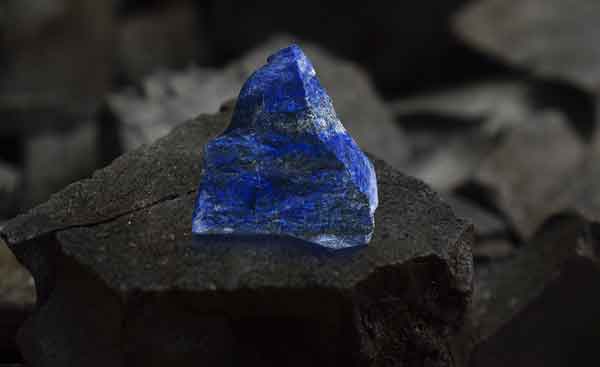
Lapis lazuli is one of the world’s most ancient and valued stones – a symbol of wisdom, truth, and inner strength. In this guide you will discover its key properties, history, and how to recognize the genuine stone.
Lapis Lazuli (Lazurite) – Properties, Meaning, History and How to Recognize the Genuine Stone
Lazurite, also known as lapis lazuli, is one of the most recognizable and revered stones in human history.
Its deep blue color, often scattered with golden flashes of pyrite, creates the impression of an endless night sky captured in a single, almost living stone.
You may not know this – lazurite is the mineral itself, while lapis lazuli is the rock composed of lazurite, pyrite, and calcite. This distinction is often overlooked, but it is important to collectors and geologists.
In jewelry, the two names are often used as synonyms.
Lapis lazuli is more than a stone – it is often regarded as a symbol of nobility, power, wealth, as well as spirituality and intuition.
Lazurite – Basic Physical and Chemical Properties
- Chemical composition: A complex sodium-calcium aluminosilicate containing sulfur, which gives the stone its intense blue color. Its formula is (Na,Ca)₈(AlSiO₄)₆(S,Cl,SO₄,OH)₂.
- Hardness: Between 5.5 and 6 on the Mohs scale, which makes it relatively soft compared with diamond or sapphire. It requires gentle care.
- Inclusions: golden pyrite, white calcite veins
- Luster: matte to vitreous
- Structure: massive, opaque
- Color: rich dark blue to ultramarine, with sparkling golden inclusions of pyrite; in some areas it may also appear lighter or grayish.
- Similar minerals: Sodalite – lazurite belongs to the same group.
- Appearance: It occurs as dense, fine-grained masses with inclusions of pyrite, diopside, calcite, and other minerals. These are what create its characteristic golden flashes.
Commercial forms:
- • rough – pieces for placing on a chakra or a specific area
- • polished or shaped – in the form of figures, pyramids, cabochons, and beads for jewelry
Geological Origin and Deposits
Lapis lazuli forms in metamorphic rocks under high pressure and temperature.
Main deposits:
- Afghanistan, Chile, Russia (Siberia), Pakistan, Italy (more limited), Myanmar (Burma), and other regions.
It is interesting to note that Afghan lapis has been mined for more than 6,000 years, making it one of the oldest known decorative stones.
Lapis Lazuli and the Zodiac Signs
Lazurite is regarded as a powerful conductor of energy and a stone of truth and wisdom.
In astrology, it is believed to resonate particularly strongly with the following signs:
- Sagittarius: As a primary stone for this sign, it helps Sagittarians direct their expansive energy toward deeper self-knowledge and more objective judgment.
- Aquarius: It strengthens their originality and humanitarian nature while also giving them stability when making important decisions.
- Virgo: It helps analytical Virgos release excessive self-criticism and build more harmonious, open friendships.
- Taurus (a sign ruled by Venus): Although Taureans are earthy and practical, lazurite helps them connect with their higher spiritual side. It softens their stubbornness and helps them accept new ideas without feeling threatened.
- Libra: As a stone of harmony and communication, lazurite is considered ideal for Libra. It supports diplomacy and helps them make decisions more decisively, balancing their tendency toward hesitation.
- Pisces: For dreamy Pisces, lazurite acts as an “anchor” for intuition. It helps them structure their visions and express their rich inner world more clearly while protecting them from emotional overload.
- Capricorn: For serious Capricorns, this stone offers a dose of inspiration and helps ease the stress of the great responsibility they often carry. It helps them express their feelings more openly in both professional and personal relationships.
Energy Centers (Chakras)
In lithotherapy, lazurite is used to balance the upper energy centers, helping to clarify thought and expression:
- Throat Chakra (Vishuddha): As the “voice of the body,” this chakra is stimulated by the blue color of lazurite. The stone is believed to help its wearer express their truth clearly, confidently, and without fear.
- Brow Chakra (Ajna – “Third Eye”): Thanks to its deep color, the stone is considered ideal for meditation. It is associated with intuition, insight, and expanded awareness.
Application tip: For the best effect when working with the chakras, lazurite can be worn as a necklace (close to the throat) or placed on the forehead during relaxation to help “clear” the mind.
Historical Meaning and Symbolism: Humanity’s “Blue Gold”
Lapis lazuli has an exceptionally rich cultural history:
Ancient Egypt: The eye of the gods. For the Egyptians, the dark blue color with golden sparks represented the night sky and rebirth. It was believed that the stone contained a fragment of the spirit of the gods. In Ancient Egypt, it was used for amulets, jewelry, and masks, including Tutankhamun’s funerary mask. Beyond the famous mask of Tutankhamun, lapis was also an important material for making scarabs – symbols of protection. It was often ground into powder to create some of the earliest blue eye cosmetics, used by noblewomen, including Cleopatra, to emphasize their divine status.
In Mesopotamia – a symbol of divine connection.
In Sumerian epics, lapis lazuli is mentioned as a material worthy only of the gods.
Interesting fact: In the famous “Epic of Gilgamesh,” the horns of the Bull of Heaven are described as being made of pure lapis lazuli. Seals: Rulers used cylindrical lazurite seals to authenticate their authority, believing that the stone guaranteed divine blessing for their decrees.
The Renaissance: Ultramarine – the color of the Divine. During the Middle Ages and the Renaissance, lapis lazuli was more expensive than gold. Because it was imported to Europe from “beyond the sea” (Latin: ultra mare), the pigment made from it became known as Ultramarine.
Artists: Michelangelo used ultramarine for the sky in the Sistine Chapel, while Vermeer went deeply into debt to purchase the pigment for his “Girl with a Pearl Earring.”
Because of its high cost, contracts with artists often specified exactly how many grams of ultramarine would be used. It was usually reserved only for the robes of the Virgin Mary or Jesus Christ.
Interesting facts few people know
- Marco Polo and the discovery: In 1271, the great traveler Marco Polo visited the mines of Badakhshan (present-day Afghanistan) and wrote: “Here there is a mountain where the finest blue in the world is mined.” These mines have operated continuously for more than 6,000 years to this day!
- Medicine for the soul: In the past, healers believed that drinking water in which lazurite had been soaked would cure melancholy (depression) and “wash away” bad thoughts.
- Fabergé eggs: The famous jeweler Carl Fabergé used lazurite to make some of his most exquisite imperial eggs because of its density and royal appearance.
Modern Meaning and Use of the Blue Stone Lazurite
Today, lazurite continues to symbolize personal authenticity, inner strength, and continuous intellectual growth. Thanks to its timeless beauty and intense energy, it has a place both in fine jewelry collections and in modern spiritual practices for self-knowledge.
Key Aspects of the Stone
Lazurite is regarded as a conductor of forces that help modern people find their center. It is directly associated with:
- Clarity of thought: Helps separate what is important from what is not.
- Communication: Supports the expression of one’s own position.
- Intuition: Opens awareness to the subtle signals of the inner voice.
- Inner truth: Encourages honesty with oneself and the world.
Energetic and Emotional Influence
In a dynamic daily life, lazurite acts as an “emotional anchor.” Its presence is associated with a number of benefits:
- Calms the mind: It is considered deeply relaxing during periods of high stress and nervous tension.
- Strengthens intuition: It supports decision-making by connecting logic with inner instinct.
- Improves communication: It is believed to clear blocks in communication, making it ideal for people whose work involves public speaking or negotiation.
- Supports relationships: As a stone of truth, it is associated with building bridges of trust and understanding between close people.
My advice: If you wear lazurite as jewelry (a bracelet or necklace), try touching it in moments of tension. Its cool, smooth surface and deep color can immediately help bring your attention back into focus.
Symbolism and Spiritual Meaning of Lapis Lazuli
Lapis lazuli is more than a decorative stone – it is an “intellectual catalyst.” Its energy is believed to work toward clearing the mind and strengthening the spirit.
Truth and Honesty (The Stone of the Word)
Lazurite is considered one of the most powerful stones for encouraging self-awareness. It helps us look truth in the eye, no matter how difficult it may be.
- In relationships: Supports open and honest communication without fear of conflict.
- Inner peace: Helps us stop deceiving ourselves and accept our authentic nature.
Wisdom and Intellect
In the ancient schools of Greece and Rome, lapis was called “sapphire” before the modern name came into use, and it was believed to grant its owner clairvoyance and a clear mind.
- For students and professionals: It is believed to improve memory, concentration, and the ability to absorb new information quickly.
Spiritual Awakening and Inner Knowledge
Thanks to its association with the Brow Chakra (Third Eye), lazurite is regarded as a bridge between the conscious and subconscious mind.
- Dreams: Placed under the pillow, it is often said to encourage vivid and symbolic dreams that may help bring awareness to inner processes.
- Intuition: It strengthens the inner voice, helping us distinguish the ego from true intuition.
Interesting Facts about Lazurite’s “Royal Status”
Authority and power: During the Middle Ages, it was believed that wearing lazurite attracted the favor of the gods and protected against envy. For this reason, it became a common element in the crowns and signet rings of European monarchs.
The stone of judges: In Ancient Egypt, the chief judge often wore around the neck a figure of Ma’at, the goddess of truth and justice, carved from lapis lazuli.
Symbol of the celestial river: In Eastern mysticism, the blue color of lazurite symbolizes the infinity of space and the “celestial river” that purifies the souls of the wise.
“If the diamond is a symbol of hardness and the ruby of passion, then lazurite is a symbol of awareness.”
Healing and Energetic Properties
The information below presents general traditional guidelines – stones and crystals are not a medical treatment. Diagnosis and treatment should be carried out only by a qualified medical professional.
In traditional practices, lapis lazuli is associated with support for the throat area and communication. Worn as a pendant or necklace, it is believed to support a sense of balance around the throat, vocal cords, and larynx.
It is often recommended when there is a need for inner calm and stabilization, as well as a symbolic support for the immune system and overall vitality. On an energetic level, it is associated with the throat center, where it is placed with the intention of harmonizing expression and inner truth.
Placed over the heart area, it is traditionally associated with a sense of calm and emotional balance. Held in the hand, it is used as a supportive tool during tension and headaches.
Frequent contact with lazurite is associated with mental clarity, developing intuition, and better inner balance. It is also believed to support harmony in relationships.
How to Recognize Genuine Lapis Lazuli
View this post on Instagram.
Finding authentic lapis lazuli requires a trained eye, as the market is full of imitations. Genuine stone has several specific characteristics that are difficult to fake:
- Golden pyrite inclusions: In natural stone, pyrite appears as fine embedded dots or tiny metallic grains. If the sparkle is too uniform or looks like “glitter” applied on the surface, it is probably an imitation.
- Slightly uneven color: Nature rarely creates perfect uniformity. Natural lapis almost always shows variations in blue – from dark to slightly lighter shades – which give it depth.
- White veins and areas: The presence of calcite (white spots or threads) is a normal part of the rock’s structure. An overly perfect, solid blue color with no inclusions at all is typical either of extremely expensive museum-quality specimens or of imitations.
Common imitations to watch out for:
- Dyed howlite or magnesite: These are among the most common imitations. These minerals are porous and absorb blue dye easily. You can identify them by rubbing a small area with a cotton pad soaked in acetone – if the cotton turns blue, the stone has been dyed.
- Synthetic materials: Laboratory-created stones (such as “Gilson stone”) often look too uniform and too light. They lack the characteristic “weight” and cool touch of the genuine mineral.
- Reconstituted (pressed) stone: Made from lapis powder and small fragments mixed with resin and adhesive. This treatment actually makes it possible for material based on expensive stone to be offered at a lower price.
Care and Maintenance
Because of its porous structure and relatively low hardness (5.5–6 on the Mohs scale), lazurite requires special care to preserve its rich color and natural luster:
- Avoid contact with water and chemicals: Lapis lazuli is sensitive to acids and strong cleaning products. Even prolonged exposure to water can penetrate microcracks in the stone and damage the calcite inclusions within it.
- No ultrasonic cleaning: Never place lazurite in ultrasonic or steam cleaning machines. Strong vibrations can cause cracking or even complete damage to its structure.
Proper storage: Always store lazurite jewelry separately from harder stones (such as diamonds, sapphires, or quartz) to avoid scratching its surface. It is best kept in a soft textile pouch.
Cleaning: Use only a soft, dry cloth to remove dust or fingerprints. If it is heavily soiled, you may use a slightly damp cloth with lukewarm water, then dry it carefully immediately afterward.
Charging and Cleansing Lapis Lazuli
Charging with Selenite (The Stone of Liquid Light)
Selenite is believed to have the unique ability to cleanse and charge other stones without accumulating negative energy itself.
- Method: Place your lazurite on a selenite plate or simply leave the two stones touching for several hours (ideally overnight).
- Effect: Selenite is believed to “draw out” accumulated tension from the lazurite and fill it with a high, pure vibration.
Charging with Amethyst (The Stone of Spiritual Protection)
Amethyst is believed to help lazurite strengthen its connection with intuition and the “Third Eye.”
- Method: Place the lazurite on an amethyst cluster (a group of crystals) or in a bowl with small amethyst stones.
- Effect: This combination is considered especially powerful for people who use lazurite for meditation, as amethyst calms the mind and prepares lazurite for deeper spiritual work.
Other safe charging methods:
Moonlight: Lazurite is traditionally associated with the energy of the Moon. Place it on a windowsill during a full moon. The cool moonlight is considered perfectly aligned with its “night” nature. (Avoid strong sunlight, as it may fade the stone’s color.)
Smoke from Palo Santo, incense, or sage: Cleansing the stone with smoke is a quick way to “clear” energies from other people if someone else has touched your jewelry.
Important reminder: Never use salt water (or aggressive chemicals) to cleanse lazurite, as salt can corrode its surface and destroy the luster of the pyrite.
Lapis lazuli is more than a mineral; it is a fragment of eternity that has passed through the hands of pharaohs, Renaissance masters, and modern seekers of truth. With its rich blue color and golden sparks, it remains a bridge between the earthly and the divine, between pure intellect and deep intuition.
Whether you choose it for its ancient history, as a powerful energetic protector for your zodiac sign, or simply as an elegant piece of jewelry, lazurite requires respect and care. When we treat it with attention, it rewards us with clarity of thought, inner peace, and the courage to express our deepest authenticity.
In a world of passing things, lazurite remains a symbol of what endures – wisdom and truth.


