Crystals, Esotericism, Information and Personal Jewelry Stories
Heat-Treated Citrine – How It Is Made

Why Most Citrine on the Market Is Heat-Treated
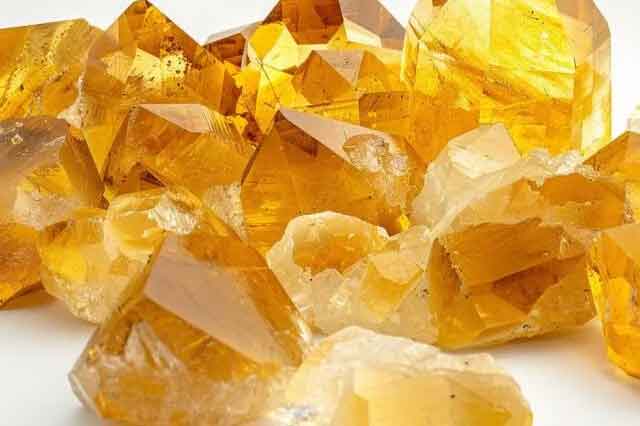
Many people are surprised to learn that a large part of the citrine sold on the market is actually produced by heating other quartz minerals.
The reason is simple – natural citrine is relatively rare. To achieve the characteristic golden color, the natural ability of certain stones to change their hue at high temperatures is often used.
Most citrine on the market today is in fact made from “transformed” stones. Because natural citrine is relatively rare, the ability of some minerals to change color at high temperatures is used.
Here is how the magic (and science) behind the process works:
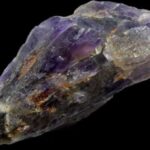
1. Starting material: Amethyst or Smoky Quartz (smoky, gray)
Amethyst is used most often, or less commonly smoky quartz. These stones contain traces of iron in their crystal lattice that react to heat.
2. The heating process
The stones are placed in special furnaces where the temperature is raised in a controlled way:
Temperature range: Usually between 470°C and 560°C.
Transformation: During heating, the iron in the crystal lattice changes its oxidation state.
This causes a permanent change in the way the mineral refracts light – and this is how the characteristic citrine color appears.
Result: The iron in the stone changes its oxidation state, permanently altering the way light is refracted.
How can you tell heat-treated citrine from natural citrine?
The difference can be visible even to an untrained eye if you know what to look for:
| Characteristic | Heated Amethyst (Treated) | Natural Citrine |
| Color | Deep orange, amber, or reddish tones, often with a white base (a remnant of the amethyst geode). | Pale yellow, “lemon,” or pastel tones. The color is even throughout the crystal, without a white base. |
| Distribution | The color is concentrated at the crystal tips. | The color is distributed gradually; pleochroism may occur (the shade changes slightly when viewed from different angles). |
| Form | Usually sold as “clusters” (many small crystal points on a single base). | Most commonly found as individual single crystals. |
Important clarification
Heating is not a “fake,” but a widely used practice in mineralogy and jewelry making. The resulting stone remains natural quartz, simply with an altered color.
Natural citrine is rarer and usually has softer, light-yellow shades, while heated citrine is often a more intense orange.
Natural citrine is believed to carry pure solar energy and not retain negative vibrations.
Heated amethyst is believed to retain some of amethyst’s cleansing properties, while its energy is considered more “fiery” and intense because of the heat treatment.
How to cleanse your favorite citrine talisman?
Interesting fact: If amethyst is heated to an excessively high temperature (above 600°C), it may become milky white or completely colorless.